Join us to comment on new releases, make recommendations, receive our monthly newsletter and be eligible for exclusive offers
An astonishing, unforgettable novel: a thrilling Second World War assassination plot told with rare literary ...
Iris Murdoch was born in Dublin in 1919 of Anglo-Irish parents. She went to Badminton School, Bristol, and read classics at Somerville College, Oxford. During the war she was an Assistant Principal at the Treasury, and then worked with UNRRA in London, Belgium and Austria. She held a studentship in philosophy at Newnham College, Cambridge, and then in 1948 she returned to Oxford, where she became a Fellow of St Anne's College. Until her death in February 1999, she lived with her husband, the teacher and critic John Bayley, in Oxford. Awarded the CBE in 1976, Iris Murdoch was made a DBE in the 1987 New Year's Honours List. In the 1997 PEN Awards she received the Gold Pen for Distinguished Service to Literature. Iris Murdoch made her writing debut in 1954 with Under the Net, and went on to write twenty-six novels, including the Booker prize-winning The Sea, The Sea (1978). Other literary awards include the James Tait Black Memorial Prize for The Black Prince (1973) and the Whitbread Prize (now the Costa Book Award) for The Sacred and Profane Love Machine (1974). Her works of philosophy include Sartre: Romantic Rationalist, Metaphysics as a Guide to Morals (1992) and Existentialists and Mystics (1997) She wrote several plays including The Italian Girl (with James Saunders) and The Black Prince, adapted from her novels of the same name.
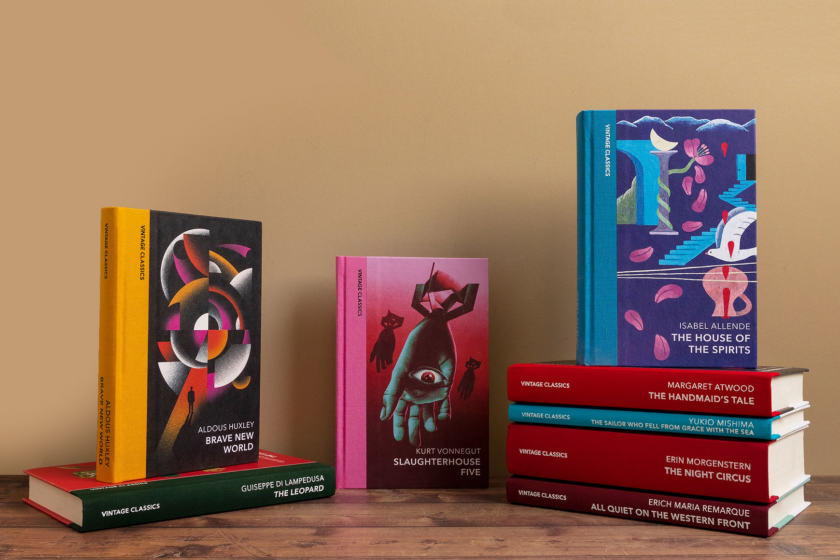
A designer Vintage Classics edition, published in association with the Victoria and Albert Museum. The cover for The Sea, the Sea has been designed by Zandra Rhodes
The debut novel from one of the most remarkable writers of the 20th century.
Iris Murdoch's unique study of one of the 20th century's foremost thinkers
'It is witty and wise and provocative...brilliantly good' Evening Standard
Iris Murdoch's funny and sad novel is about religion, the fight between good and evil and the terrible accidents of human frailty.
'A thoroughly gripping, stimulating, and challenging fiction' The Times
'Iris Murdoch has written a book which concerns all of us as human beings. There are pages here that one wants to embrace her for, pages that say things of fundamental human importance in a way that they ...
'Of the novelists who have made their bow since the war she seems to me to be the most remarkable' Raymond Mortimer
'Iris Murdoch is incapable of writing without fascinating and beautiful colour' The Times
'Iris Murdoch was one of the best and most influential writers of the twentieth century.' Peter Conradi, Guardian