Happy 100th Birthday, Harvill Secker!
Or, to be accurate – and we are editors, after all – 2010 sees us celebrating the centenary of our first incarnation, Martin Secker Ltd. You can read here how Secker met Warburg and Harari met Villiers, and how, in 2005, Harvill Secker was born: the well-muscled progeny of two of the greatest lists in UK publishing, with 20 Nobel Prize-winners to its name.
While researching the history, Publishing Director Liz Foley and I had a wonderful time delving into the archives, reading memoirs and speaking to authors and past directors. The most entertaining character of all has to be, for me at least, the late publisher Fredric Warburg. The words ‘Romantic’, ‘quixotic’, ‘not exactly businesslike’ have all been used to describe the great man, and his time at Secker & Warburg was marked by success – Orwell’s Animal Farm and Nineteen Eighty-Four – and a dash of controversy – Stanley Kauffman’s The Philanderer. But perhaps the most bizarre moment in Warburg’s literary career involves Secker & Warburg’s very own fake Tibetan lama, Lobsang Rampa.
Warburg was sceptical when he received Rampa’s autobiography from agent Cyrus Brooks, noting ‘visits by lamas to literary agents’ offices in London are, to put it mildly, infrequent.’ But after reading the material – with its tales of life at the lamasery and Rampa’s exceptional clairvoyance following a surgical operation on his forehead and opening of ‘the third eye’ – Warburg become convinced of its authenticity and was determined to publish this potential bestseller.
Lunch with the lama raised a few alarming questions – whether such a person would order fish and chips, or, more worryingly, whether they would dismiss Tibet as a theocratic dictatorship – but Warburg and his colleagues were keen to proceed. They urged Rampa to admit to his deception, if it was indeed a hoax, adding they could publish as fiction or as ‘imaginative autobiography’. The lama stood firm. And so the manuscript was sent to an expert reader, the Orientalist John Morris. Morris declared it ‘a curious mixture of fact and fantasy’ – ‘I…find the human kite incident very hard to swallow, and I am sure the account of the yeti… is a fantasy’ – but he did not doubt the lama’s Tibetan upbringing. This was confirmation enough for Warburg, who decided to publish The Third Eye, as the book was called, with a ‘beware’ notice, which neither validated the facts nor branded the book a complete fabrication.
The autobiography sold 45,000 copies. Then came the call from the Daily Mail: Rampa was no lama. He was Cyril Henry Hoskins, the son of a master plumber from Devon. A group of Tibetan scholars, enraged by the hoax, had hired a detective to unmask the imposter. Warburg, ever the entrepreneur, struck a deal with the Daily Express and wrote an article on the affair for which he was paid handsomely. Rampa issued a statement, claiming that he was a Tibetan lama, occupying the body of an Englishman ‘to the permanent and total exclusion of the former occupant.’ Hoskins had fallen out of a tree while trying to photograph an owl, and the lama had taken over.
And Warburg’s thoughts on this bizarre confession? Those of a true publisher –
‘For me the lama’s statement was frankly a disappointment. Perhaps it was composed too hurriedly. But I felt that I could have done a better job myself.’
Nevertheless, The Third Eye went on to sell 250,000 copies and was one of Warburg’s most successful titles, showing that a little scandal can go a long way in the book trade.
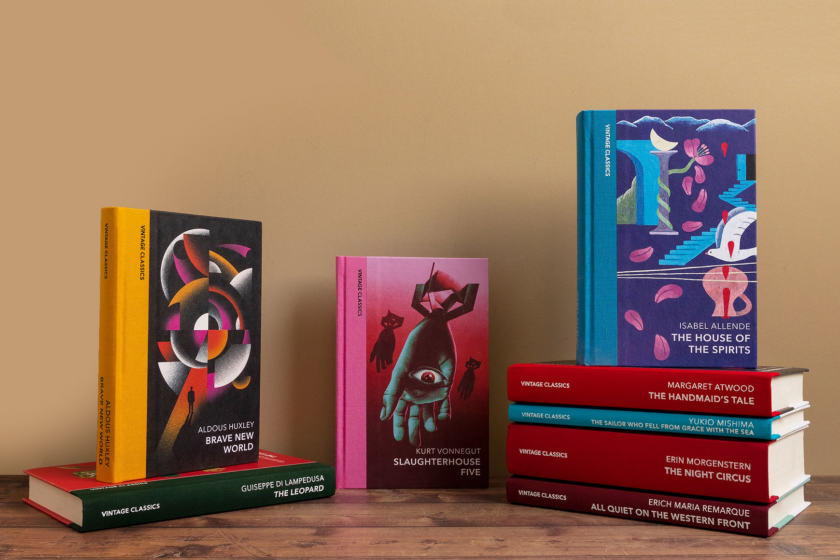
The are no Tibetan lamas – real or otherwise – on Harvill Secker’s publishing list for 2010, but we can offer you fantastic new books fromJoseph O’Connor , Per Petterson, and the late José Saramago, alongside very special editions of Disgrace, The Wind-Up Bird Chronicle and Lampedusa’s The Leopard. To find out more about our centenary visit
www.vintage-books.co.uk/harvillsecker
Ellie Steel, Assistant Editor Harvill Secker