We are in both celebratory and sombre mood at Harvill Secker – celebratory because we are in our centenary year, with lots of great things going on (http://bit.ly/bIHSrN), sombre because of the death on 18 June of the great Portugese novelist José Saramago. Considering his age (87) and the fact that he had been suffering from illness, Saramago had been miraculously productive in the years prior to his death, publishing in Portugal two wonderful books, The Elephant’s Journey and Cain. Cain is currently being translated into English by Saramago’s translator, Margaret Jull Costa, but Margaret’s translation of The Elephant’s Journey is coming out in August, and we were hoping that Saramago would be with us in the UK to mark its publication. We will feel very forlorn without him. Aside from official letters of condolence, I made a quiet, personal tribute to the great man at Paddington Station last week. Our marketing campaign for The Elephant’s Journey has a ‘book crossing’ element, and we have been leaving proofs of the novel around the place in the hope that people will pick them up, read them and pass them on. By coincidence our campaign has coincided with London’s 2010 Elephant Parade, where colourful statues of elephants have been displayed around London to raise the profile of elephant conservation. I remembered that there was one of these statues on Platform 6 of Paddington Station, but when I went back to put my proof there, it had gone, leaving the platform eerily empty. Perhaps an elephantine comment on Saramago’s departure … Instead I left my proof by the entrance to the Tube in the hope that someone might cherish it. I wonder if any of the proofs have been found. There is nothing on our Facebook page (http://bit.ly/aMsc6G) which looks inappropriately festive now. But perhaps festive is good: there is much to celebrate in the life and work of Saramago, and publication of The Elephant’s Journey – a beautifully bitter-sweet novel that is about death and endurance but also the small wonders of life – will be a chance for us to do so.
Saramago’s work has been one of the backbones of the Harvill list since The Year of the Death of Ricardo Reis was published in 1993. I say Harvill, rather than Harvill Secker, because our list in its current form was created in 2005 by the joining together of two great imprints, Harvill (an amalgamation of the names of its two founders Manya Harari and Marjorie Villiers who set it up in 1946) and Secker & Warburg, begun by Martin Secker in 1910. The history of the two imprints is fascinating and, in the years following the Second World War, both played a huge part in bringing foreign literature to Britain in an attempt to recreate international links destroyed by the conflict. I love publishing history and I had great fun helping research the little booklet on the background to Harvill Secker that we produced for the centenary.( View the leaflet here.) I was therefore curious to know how Harvill had come to publish Saramago. Christopher MacLehose, the then Publishing Director of Harvill, filled me in. As so often, it was the passion of a translator that brought Saramago to Maclehose’s attention – Giovanni Pontiero, who sadly died in 1997. MacLehose described the excitement with which Pontiero urged him to publish The Year of the Death of Ricardo Reis, calling it potentially one of the greatest Portuguese novels of all time. It was evident, said MacLehose, that this was one of those books that ‘you simply mustn’t not publish’. He wasn’t, however, optimistic about the number of copies it would sell. But its fortunes changed because of two factors: firstly it won the 1993 Independent Foreign Fiction Prize (the prize was in its early days having been started in 1990, but immediately influential) and, secondly, Tim Waterstone himself read and loved the book, and told all his booksellers they should stock it, as did Terry Maher at Dillons – showing how powerful personal passions among booksellers can be.
I’m excited to see some personal passions being aired in the comments on last week’s blog where several people recommend Italian books (and recalled highlights of the Harvill Secker list – Jon, we’re looking into it). In our ‘Armchair Traveller’ feature this week we have Kylee Doust, Niccolò Ammaniti’s agent, reflecting on what people are reading in Italy at the moment. I didn’t put her up to talking about Fabio Geda, but it’s nice she did. We’ll be publishing his book next June, and we’ve just acquired a novel by the director of the film, Il Divo, Paolo Sorrentino. Narrated by Tony Pagoda, a 44-year-old Neopolitan crooner alla Sinatra, Hanno Tutti Ragione (They’re All Right) is a satire of Italy in the last decades of the twentieth century. Pagoda is cynical, sexist, homophobic, narcissistic, and a hopeless romantic of the hard-boiled sort, but his outpourings possess that peculiarly Italian combination of irony and poetry which makes this novel a great read. Now we just need to find a translator who can capture all that!
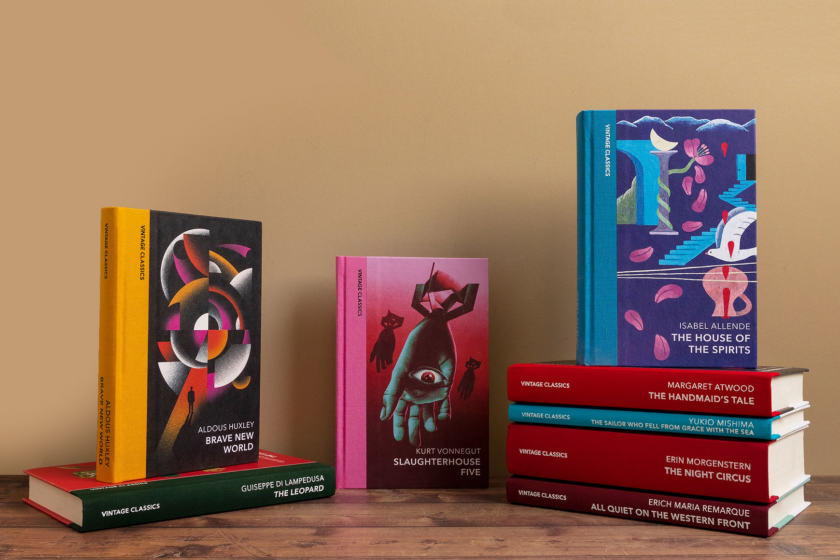
Aside from the books Harvill Secker publishes, I too am a fan of Ammaniti, I’ve got Pietro Grossi on my bedside table (I’ll report back) as well as Massimo Carlotto’s Poisonville because I want to check out what’s happening in Italian crime writing. Our thanks go to Tim Parks, Italian translator par excellence, whose own book comes out this month, for providing us with a few words on one of Harvill’s greatest successes Giuseppe Tomasi di Lampedusa’s .The Leopard My next mission: to find out what it is in the writing of Patrick McGrath that so appeals to the Italians