JULY'S BOOK OF THE MONTH
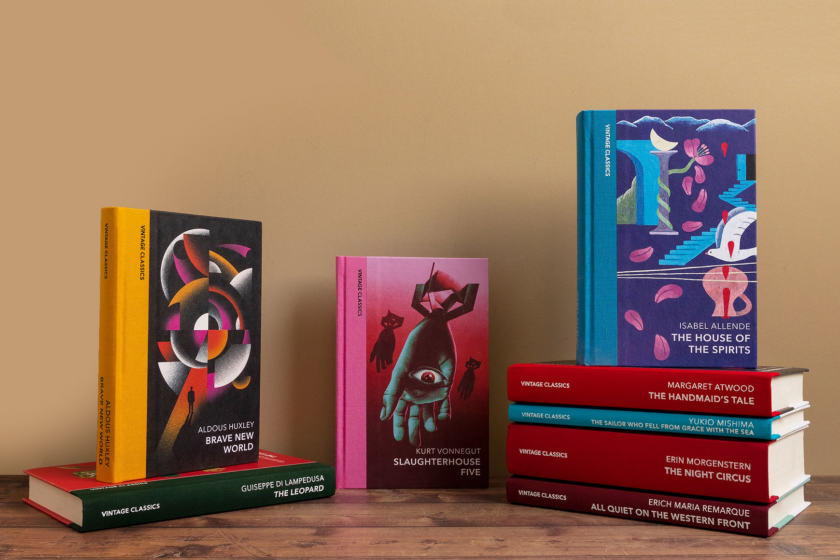
More than any other Italian novel, The Leopard announces the end of any optimism arising from the risorgimento, the movement that brought about the unification of Italy in the mid-nineteenth century. As Garibaldi’s army marches triumphantly through Sicily, and families are split in their support for the old or new regimes, Tomasi di Lampedusa shows how the feral pessimism of the Sicilians inevitably saps all idealism from the movement, and how change is quickly accepted in order to make sure that all remains precisely and cynically as it always was. This is a wonderfully colourful piece of narrative, as in love with life as it is free from any illusion about the possibilities for progress and social justice.
Tim Parks, whose book Teach Us To Sit Still comes out this month.
Read a series of blog posts and extracts from Tim's book here.

ARMCHAIR TRAVELLER: ITALY
Kylee Doust is an Australian living in Rome who has run a literary agency representing Italian writers for 8 years.
If you were to base your conceptions of Italian literature on the bestseller list of the moment you would have a distorted idea of Italian literary reality because of course we are heading into summer and that's when people decide to buy their light summer reading. The charts are currently dominated by Andrea Camilleri (his Montalbano series is published by Picador in the UK) - which happens regularly, every six months when a new book of his is published; by Gianrico Carofiglio's new novel There Is No Wisdom (he is published by Bitter Lemon Press in the UK) - in fact he has five titles in the top 25. Both are mystery novels which are heavily characterized by the ambience of the city they are set in - for Camilleri it is an invented Sicilian town Vigata, while Carofiglio's are set in Bari, the capital of Apulia. Interestingly the lists are heavily dominated by male writers - of the top 25 only three are women - perhaps it is only a coincidence that they also happen to be three very photogenic women (and hence easier to promote)?
As for what young writers are writing about in Italy, the first thing we need to establish is what is Italy’s definition of a ‘young writer’? As young 43-year-old Niccolò Ammaniti (published by Canongate in the UK) often says: ‘They will be calling me a young writer even when I've gone into retirement.’ Nevertheless, recently there has been a wave of new ‘truly’ young writers (meaning that they are under thirty) who all seem to be writing dramatic stories - very few romantic love stories or stories with happy endings. At the moment I am reading Devotion by 30-year-old Antonella Lattanzi who spent five years living in the world of heroin addicts in order to research her debut novel. There is also Silvia Avallone's Acciaio (Steel) which is set in the Italian equivalent of Manchester - where a teenage girl is abused by her factory worker father. I think that the difficult economic and employment situation in Italy at the moment is making it hard for young writers to think optimistically.
As in the rest of Europe, Scandinavian thrillers, mystery novels set in Barcelona and Vampire love stories are also very popular here although it does seem that the latter are starting to fade out a little and we are easing back towards love stories between human beings, or literary novels such as Cormac McCarthy's The Road (thanks also to the recent film release) or José Saramago's new novel Cain. Of course book sales are down in general all across Italy and publishers are struggling to deal with the drop in traditional book sales and to find ways to deal with new technology and the advent of ebook rights. And as is predictable, when the world as you know it goes topsy-turvy publishers are less inclined to bet on new, different voices and prefer to stick with voices they are familiar with.
The Italian publishing world currently seems to be based on the fad of making young debut authors into fast-rising stars. Readers are seduced into buying first novels by flashy marketing campaigns and photos of these fresh-faced youths - unfortunately the marketing campaigns are often misleading, disappointing the expectations of the readers, but the debut authors find themselves skyrocketed to stardom and the conviction that they are now certified writers. I am a firm believer in the opposite - that writing is a talent but also a skill and it takes time to learn to dominate the page, and time to find your readership; that a talented writer's readership will grow over the years as his or her writing abilities improve. In fact Fabio Geda's In the sea there are crocodiles is a perfect example of this. Geda published two novels with a small publishing house from Turin, instarlibri, selling locally 20,000 copies per book over a number of years. With his third novel he has broken into the bestseller lists, and reader’s expectations have not been disappointed.
For those wanting to know what’s going on in Italian fiction, I think Niccolò Ammaniti's novels are a great introduction to contemporary Italian literature - they have nothing to do with Under a Tuscan Sun but paint an honest picture of Italy today, with great irony and originality, unexpected twists and turns, and laugh out loud descriptions. If you prefer something more dramatic, Davide Longo's novel The Vertical Man (to be published by MacLehose Press in 2011) is a stunning novel set in a catastrophic Italy in the near future. Or if you prefer a dense more philosophical writing style, Francesco Pacifico's Story of My Purity (to be published by Hamish Hamilton in 2011) is a brilliantly ironic novel about a devout Catholic who feels imprisoned by his faith and is unable to resist temptation.